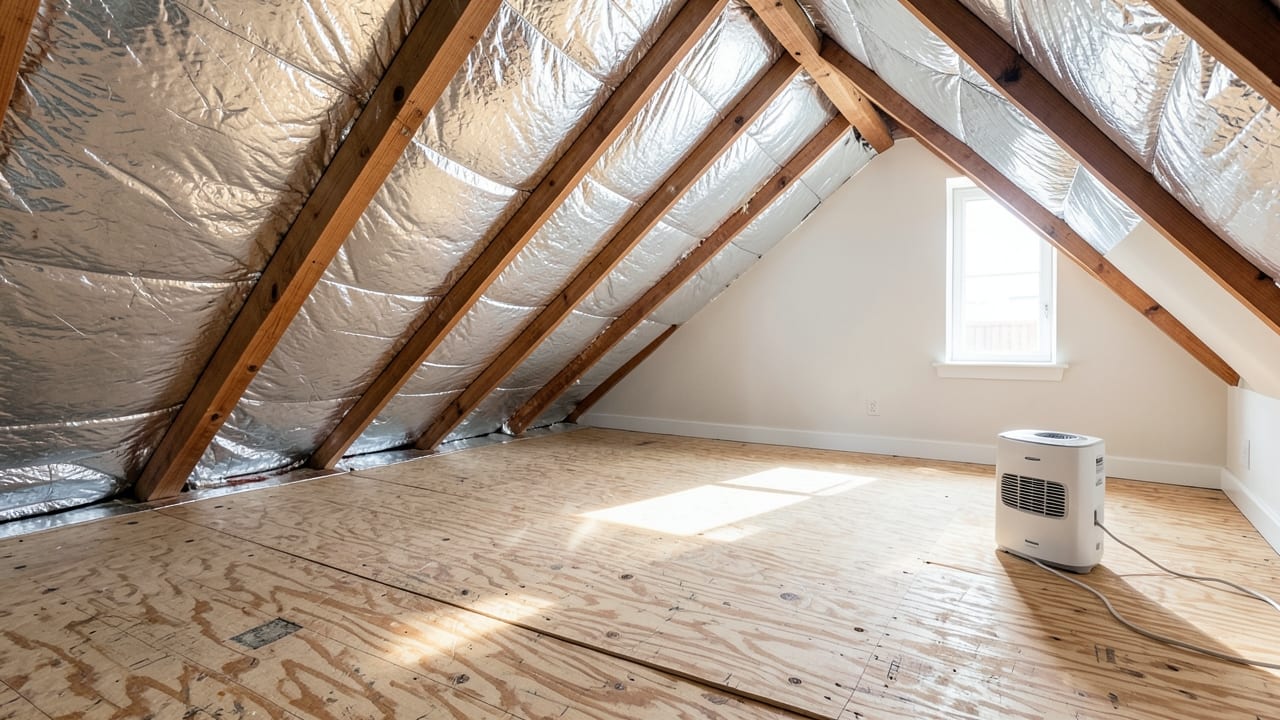
Pre-Winter Mold Prevention
Pre-winter mold prevention involves inspection and treatment to stop mold growth before cold weather.
As temperatures drop in Glen Mills, PA, moisture trapped in attics, basements, and crawl spaces creates ideal conditions for mold growth. Pre-winter mold prevention focuses on sealing leaks, improving airflow, and applying targeted treatments to vulnerable areas before hidden problems become visible.
This proactive approach helps protect your home’s structural integrity and indoor air quality before winter sets in.
We also handle Hotel Mold Remediation and Gym Mold Remediation for Glen Mills properties.
When to act: signs mold prevention is needed
Mold often starts small but spreads quickly in damp, poorly ventilated spaces. Look for visible growth covering more than a small patch (over 25 square feet), repeated regrowth after cleaning, or a persistent musty odor—especially when the HVAC runs.
These signs indicate moisture issues that need professional attention before they worsen in colder months.
Hidden mold thrives in wall cavities, under flooring, or inside ductwork, where it’s harder to spot. If you notice condensation on windows, water stains on ceilings, or dampness in basements or attics, these are red flags.
Addressing these areas now can prevent a larger infestation once temperatures drop and humidity rises indoors.
When to Call for Pre-Winter Mold Prevention
- Mold covers more than a small, isolated patch (25+ square feet)
- Musty smell persists even after cleaning or with HVAC running
- Visible regrowth in the same spot after previous attempts to clean
- Condensation or water stains appear on walls, ceilings, or floors
- Dampness or poor airflow in basements, attics, or windowless rooms
What affects cost and timeline?
The scope of pre-winter mold prevention work varies by the size of the affected area, the type of materials involved, and the moisture source. For example, sealing leaks and improving ventilation in an attic may require fewer materials than removing contaminated drywall in a basement.
The process also includes containment, HEPA filtration, and clearance testing, all of which contribute to the total time and cost.
Pricing for mold prevention in Glen Mills typically ranges based on the square footage treated, with additional costs for confirmed black mold cases. A thorough inspection and moisture source identification are critical steps—skipping these can lead to recurring issues and higher long-term costs.
Why timing matters before winter
Cold weather reduces ventilation and increases indoor humidity, creating the perfect environment for mold to thrive. Sealing leaks, improving airflow, and treating vulnerable surfaces before winter helps prevent moisture buildup that could lead to hidden growth.
This proactive approach also allows for proper drying and clearance testing before the space is sealed off for the season.
Pre-winter prevention is especially important in Glen Mills’ climate, where basements and crawl spaces can become damp as outdoor temperatures drop. Addressing these areas now helps ensure your home stays dry and mold-free through the colder months.
Check humidity levels in basements, attics, and windowless rooms—aim for 30–50% relative humidity to discourage mold growth. A small dehumidifier or fan can help maintain these levels in persistently damp areas.
How pre-winter mold prevention works
This process focuses on sealing leaks, improving ventilation, and treating vulnerable surfaces before winter sets in.
- 1Containment Setup
Plastic sheeting and negative-air machines seal the work area to prevent spores from spreading to uncontaminated parts of the home during removal.
- 2Material Removal or Cleaning
Porous materials like drywall or insulation that absorb mold are cut out and bagged, while non-porous surfaces like framing or tile are scrubbed and treated.
- 3HEPA Filtration and Drying
HEPA-filtered air scrubbers run continuously, and surfaces are vacuumed with HEPA equipment to capture spores. Industrial dehumidifiers dry framing and subfloors to normal moisture levels.
- 4Clearance Testing
An independent lab tests air or surfaces to confirm spore counts are back to normal levels before containment is removed.
- 5Moisture Source Fix
The underlying cause—like leaks, condensation, or grading issues—is addressed to prevent regrowth after treatment.
Frequently asked questions
How do I know if my mold issue is severe enough to need professional help?
If mold covers more than 25 square feet, keeps returning after cleaning, or you notice a musty smell with no visible growth, it’s likely time for professional intervention. Hidden mold in walls or ductwork also requires expert assessment.
Will treating the mold prevent it from coming back?
Treating mold without fixing the moisture source—like leaks or poor ventilation—often leads to regrowth. Prevention focuses on sealing leaks, improving airflow, and addressing humidity to help finish last longer.
Do I need to be home during the mold prevention process?
You typically don’t need to stay home, but the work area will be contained to prevent spore spread. Some disruption may occur, so plan accordingly for access to treated spaces.
How long does the entire pre-winter mold prevention process take?
The timeline varies by job size, but containment, removal, drying, and testing usually take 1–3 days. Clearance testing may add an extra day or two for lab results.
See Boothwyn, PA for more, or take a look at every option available in Glen Mills before booking for our complete lineup.
Ready to get started?
Talk to a local mold remediation pro in Glen Mills — get a written quote.
Other Mold Remediation Services in Glen Mills
Hotel Mold Remediation in Glen Mills, PA
Professional removal and treatment of mold growth in hotel properties to restore safe, clean environments.
Learn More
Gym Mold Remediation in Glen Mills, PA
Professional removal and treatment of mold in gyms to restore safe, clean environments.
Learn More
Fire Smoke Mold Remediation in Glen Mills, PA
Professional cleanup and restoration of fire, smoke, and mold damage in homes.
Learn More
Pet Urine Mold Treatment in Glen Mills, PA
Professional removal of mold caused by pet urine in homes, including assessment and treatment.
Learn More
Salt Air Mold Remediation in Glen Mills, PA
Professional mold assessment, containment, removal, and prevention in affected areas of the home.
Learn More
Pest Infestation Mold Remediation in Glen Mills, PA
Professional mold removal and remediation for pest-related infestations in homes.
Learn MoreCommon Questions About Mold Remediation in Glen Mills
Everything you need to know about mold remediation services in Glen Mills
How much does Pre-Winter Mold Prevention typically cost in Glen Mills, PA?
Why does Glen Mills, PA's humidity make mold a bigger risk than in drier regions?
Is black mold actually more dangerous than other mold types?
How long does a typical mold remediation job take?
Is it safe to stay in the home during mold remediation?
Can small mold problems be handled without hiring anyone?
Need Mold Remediation in Glen Mills?
Connect with local providers in Glen Mills for a detailed quote.
⏰ We answer your call • Serving all of Glen Mills and surrounding areas